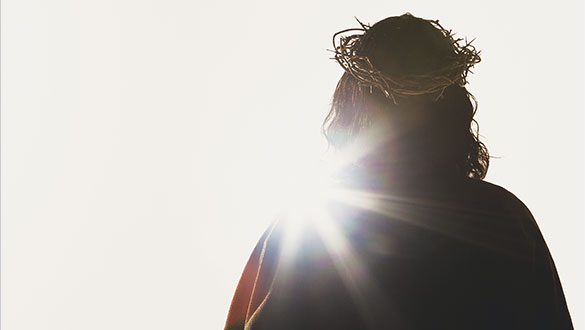
Summary of Our Christian Faith We believe:
The Triune God
God, by the
testimony of Scripture, is one divine Being in three eternal,
co-essential, yet distinct Persons – Father, Son, and Holy Spirit. He is
the one true God, eternal, immutable, omnipotent, omniscient, and
omnipresent. He is Creator of heaven and earth, Sustainer of the universe,
and Source of human salvation. Though transcendent, God is directly and
personally involved with human beings. God is love and infinite goodness. God the FatherGod the Father is
the first Person of the Godhead, the Unoriginate, of whom the Son is
eternally begotten and from whom the Holy Spirit eternally proceeds
through the Son. The Father, who made all things seen and unseen through
the Son, sends the Son for our salvation and gives the Holy Spirit for our
regeneration and adoption as children of God. God the Son
God the Son is the
second Person of the Godhead, eternally begotten of the Father. He is the
Word and the express image of the Father, by whom and for whom all things
were created. He was sent by the Father as Jesus Christ to be God revealed
in the flesh for our salvation. Jesus was conceived by the Holy Spirit and
born of the virgin Mary, fully God and fully human, two natures in one
Person. He is the Son of God and Lord of all, worthy of worship, honor and
reverence. As the prophesied Savior of humanity, he died for our sins, was
raised bodily from the dead, and ascended to heaven, from where he
mediates between humanity and God. He will come again in glory to reign as
King of kings over all nations in the kingdom of God. God the Holy Spirit
God the Holy Spirit
is the third Person of the Godhead, eternally proceeding from the Father
through the Son. He is the Comforter promised by Jesus Christ, given by
the Father to all believers. The Holy Spirit lives in us, unites us with
the Father and the Son, and transforms us into the image of Christ through
regeneration, repentance, sanctification, and continual renewal. The Holy
Spirit is the Source of inspiration and prophecy throughout the
Scriptures, and the Source of unity and communion in the church. He
provides spiritual gifts for the work of the gospel, and is the
Christian's constant Guide into all truth. The Kingdom of GodThe kingdom of God
in the broadest sense is God's supreme sovereignty. God’s reign is now
manifest in the church and in the life of each believer who is submissive
to his will. The kingdom of God will be fully manifest over the whole
world after the return of Jesus Christ when all things will become subject
to it. Humanity
God created humanity
male and female in the image and likeness of God. God blessed them,
telling them to multiply and fill the earth. In love, the Lord gave humans
power as stewards to subdue the earth and rule its creatures. In Genesis,
humanity is the crown of creation; Adam is the first human. Typified by
Adam who sinned, humanity lives in rebellion against its Creator, thus
spreading sin and death in the world. Despite human sinfulness, humanity
continues in and is defined by God’s image. Thus all humans,
collectively and individually, deserve love, honor, and respect. The
eternally perfect image of God is the Person of the Lord Jesus Christ, who
is the last Adam. God creates through Jesus Christ the new humanity over
which sin and death have no power. In Christ, humanity will bear perfectly
the image of God. The Holy Scriptures
The Holy Scriptures
are the inspired Word of God, the faithful witness to the gospel, and the
true and accurate record of God's revelation to humanity. As such, the
Holy Scriptures are infallible and are foundational to the church in all
matters of doctrine and godly living. The Church
The church, the Body of
Christ, consists of all who have faith in Jesus Christ and in whom the Holy
Spirit abides. The church is commissioned to preach the gospel, to teach all
that Christ commanded, to baptize, and to nurture the flock. In fulfilling its
mission, the church is directed by the Holy Scriptures, led by the Holy Spirit,
and looks continually to Jesus Christ, its living Head. The Christian
The Christian is any
person who trusts in Jesus Christ. The Christian experiences a new birth
through the regeneration of the Holy Spirit and is placed through adoption
into a right relationship with God and fellow humans by God's grace. The
Christian’s life is characterized by the fruit of the Holy Spirit. The Angelic RealmAngels are created
ministering spirits, endowed with free will. The holy angels serve God as
messengers and agents, are appointed to attend to those who will obtain
salvation, and will accompany Christ at his return. The disobedient angels are
called demons, evil spirits, and unclean spirits. SatanSatan is a fallen
angel who heads the evil forces in the spirit realm. The Bible refers to
him with such terms as the devil, adversary, evil one, murderer, liar,
thief, tempter, accuser of the brethren, prince of demons, and god of this
world. He is in constant rebellion against God. Through his influence,
Satan generates discord, deception, and disobedience among human beings.
In Christ, Satan is already defeated, and his dominion and influence as
god of this world will cease at Christ’s return. The Gospel
The gospel is the good
news of salvation by God's grace through faith in Jesus Christ. It is the
message that Christ died for our sins, that he was buried, that he was raised on
the third day according to the Scriptures, that he appeared to his disciples,
and that he ascended to God's right hand. It is the good news that through the saving work of Jesus Christ we
may enter the kingdom of God. Christian Conduct
Christian conduct is
characterized by trust in and loving allegiance to our Savior, who loved
us and gave himself for us. Trust in Jesus Christ is expressed by belief
in the gospel and by works of love. Through the Holy Spirit, Christ
transforms the hearts of believers, producing in them love, joy, peace,
faithfulness, meekness, kindness, goodness, gentleness, self-control,
righteousness, and truth. God’s Grace
God’s grace is the
free, unmerited favor God has chosen to bestow on his entire creation. In
its broadest sense, God’s grace is expressed in every act of his
self-disclosure. By grace, humanity and the entire cosmos have been
redeemed from sin and death through Jesus Christ, and by grace, humans are
empowered to know and love God and Jesus Christ and enter the joy of
eternal salvation in the kingdom of God. Sin
Sin is lawlessness,
that is, a state or condition of rebellion against God. From the time sin
entered the human race through Adam and Eve, humanity has been under its
yoke — a yoke that can only be removed by God's grace through Jesus
Christ. The sinful condition of humanity is manifested in the tendency to
choose self and self-interests over God and God's will. Sin causes
alienation from God, and suffering and death. Because all humans are
sinners, all humans need the salvation God offers through his Son. Faith in God
Faith in God is a
gift of God, rooted in his incarnate Son and enlightened by his eternal
Word through the witness of the Holy Spirit in the Scriptures. Faith in
God prepares and enables our minds and emotions to understand and receive
God’s gracious gift of salvation. It empowers us to participate in
spiritual fellowship and committed allegiance to God our Father through
Jesus Christ by the Holy Spirit. Jesus Christ is the author and perfecter
of our faith, and it is through faith and not by works that we are saved
by grace. Salvation
Salvation is the
restoration of human fellowship with God and the deliverance of the entire
creation from the bondage of sin and death. God gives salvation, not only
for the present life, but for eternity, to every person who accepts Jesus
Christ as Lord and Savior. This is the gift of God, by grace through faith
in Jesus Christ, not earned by personal merit or good works. Assurance of Salvation
The Bible affirms
that all whose faith remains in Jesus Christ will be saved, and that nothing
"can snatch them out of his hand." The Bible emphasizes the infinite
faithfulness of the Lord, the total sufficiency of Jesus Christ for our
salvation, the dynamic love of God for all peoples, and the gospel as the
power of God for the salvation of all who believe. Having such assurance
of salvation, believers are urged to remain firm in the faith and to grow
in the grace and knowledge of our Lord and Savior Jesus Christ. The Christian Sabbath
The Christian Sabbath is life in Jesus Christ, in whom every believer
finds true rest. The weekly seventh-day Sabbath, which was enjoined upon
Israel in the Ten Commandments, was a shadow that prefigured the true
Reality to whom it pointed – our Lord and Savior Jesus Christ. Repentance
Repentance toward a gracious God is a change of mind and attitude,
prompted by the Holy Spirit and grounded in the Word of God. It includes
an awareness of personal sinfulness and accompanies a new life sanctified
through faith in Jesus Christ. Justification
Justification is God's gracious act in and through Jesus Christ to
pronounce and establish a believer as righteous in his sight. Thus,
humanity experiences through faith in Jesus Christ divine forgiveness and
peace with its Savior and Lord. Sanctification
Sanctification is God’s gracious act of accounting and imparting the
righteousness and holiness of Jesus Christ to the believer. It is
experienced through faith in Jesus Christ and accomplished through the
indwelling presence of the Holy Spirit.
Worship is the divinely created response to the glory of God. It is
motivated by divine love and springs from God’s revelation of himself in
communion with his creation. In worship, believers commune with God the
Father through Jesus Christ by the Holy Spirit. Worship involves humbly
and joyfully giving God priority in all things and is expressed in such
actions and attitudes as prayer, praise, celebration, generosity, acts of
mercy, and repentance. Baptism
Water baptism, which signifies a believer's repentance and acceptance of
Jesus Christ as Lord and Savior, is a participation in the death and
resurrection of Jesus Christ. Baptism of the Spirit and fire refers to the
regenerating and purifying work of the Holy Spirit. The Worldwide Church
of God baptizes by immersion. The Lord's Supper
The evening before Jesus was crucified, he took bread and the cup, saying,
"This is my body, which is for you… This cup is the new covenant in
my blood." Whenever we celebrate the Lord's Supper, we partake of
bread and the cup in remembrance of our Savior, proclaiming his death
until he comes. The Lord’s Supper is a participation in the death and
resurrection of our Lord, who gave his body and shed his blood so that we
might be forgiven. Financial Stewardship
Christian financial stewardship is the management of personal resources in
a manner that reflects the love and generosity of God. It includes the
responsibility of offering a portion of one's financial resources to the
work of the church. Donations fund the God-given mission of the church to
preach the gospel and feed the flock. Such giving reflects the believer's
worship, faith, obedience, and love for God, who is the Source of
salvation and Giver of all good things. Church Leadership
The Head of the church is Jesus Christ, who reveals the will of the Father
to the church through the Holy Spirit. Through the Scriptures the Holy
Spirit instructs and empowers the church to serve the needs of
congregations. The Worldwide Church of God seeks to follow the lead of the
Holy Spirit in serving its congregations as it ordains elders, deacons and
deaconesses and appoints ministry leaders. Bible Prophecy
Bible prophecy reveals God and his will and purpose for humanity. In Bible
prophecy, God declares that human sinfulness is forgiven through
repentance and faith in the saving work of Jesus Christ. Prophecy
proclaims God as Sovereign Creator and Judge of all, assures humanity of
his love, mercy, and faithfulness, and motivates the believer to live a
godly life in Jesus Christ. The Second Coming
Jesus Christ, as he promised, will return to earth to judge and reign over
all nations in the kingdom of God. His second coming will be visible, and
in power and glory. This event inaugurates the resurrection and reward of
the saints. The Inheritance of Believers
The inheritance of believers is salvation and eternal life in Christ as
children of God in communion with the Father, the Son, and the Holy
Spirit. The Father conveys believers even now into the kingdom of his Son,
and their inheritance is reserved in heaven to be bestowed fully at the
second coming of Christ. The resurrected saints reign with Christ in the
kingdom of God. Eternal Judgment
At the end of the age, God will gather all the living and the dead before
the heavenly throne of Christ for judgment. The righteous will receive
eternal glory, and the wicked will be condemned to the lake of fire. In Christ the Lord makes
gracious and just provision for all, even for those who at death appear
not to have believed the gospel. Hell
Hell is the separation and alienation from God chosen by incorrigible
sinners. In the New Testament, hell is referred to by the terms "lake
of fire," "darkness," and Gehenna
(a gorge outside Jerusalem where garbage was burned). Hell is
characterized by punishment, torment, anguish, weeping and gnashing of
teeth, and eternal destruction. The biblical terms Sheol and Hades,
often translated "hell" or "the grave," refer to the
realm of the dead. The Bible teaches that unrepentant
sinners will suffer the second death in the lake of fire, but it does not
make absolutely clear whether this means annihilation or conscious
spiritual alienation from God. Heaven
Heaven is a biblical term applied to the chosen dwelling place of God and
the eternal destiny of all God’s redeemed children. To be in heaven
is to remain in Christ in the presence of God, where death, mourning,
crying, and pain will be no more. Heaven is characterized by everlasting
joy, blessed peace, and the righteousness of God. The Intermediate State
The intermediate state is the condition of the dead until the resurrection
of the body. Christians hold various viewpoints on the nature of the
intermediate state based on their interpretation of relevant biblical
passages. Some passages suggest a conscious intermediate state, and others
an unconscious state. The Worldwide Church of God believes both views
should be respected. The Millennium
The Millennium is the time span described in the book of Revelation during
which Christian martyrs reign with Jesus Christ. After the Millennium,
when all enemies have been put under his feet, and all things made subject
to him, Christ will deliver the kingdom to God the Father, and heaven and
earth will be made new. Some Christian traditions interpret the Millennium
as a literal 1000 years to precede or follow the return of Jesus, while
others believe that the scriptural evidence points to a figurative
interpretation: an indeterminate time span commencing with Jesus’
resurrection and concluding with his return. Historical Documents of the Christian Church A creed is a brief statement of faith used to enumerate important truths, to clarify doctrinal points, and to distinguish truth from error. Creeds are usually worded to be easily memorized. The word creed comes from the Latin word credo, meaning, "I believe." The Bible contains a number of creed-like passages. For example, Jews used the Shema, based on Deuteronomy 6:4-9, as a creed. Paul wrote simple creed-like statements in 1 Corinthians 8:6; 12:3; and 15:3-4. 1 Timothy 3:16 also appears as a creed, a concise statement of belief. As the early church spread, there was a practical need for a statement of faith to help believers focus on the most important doctrines of their Christian faith. The Apostles’ Creed is appropriately named not because the original apostles wrote it, but because it accurately reflects the teaching of the apostles. Church fathers Tertullian, Augustine, and other leaders had slightly different versions of the Apostles’ Creed, but the text of Pirminius in A.D. 750 was eventually accepted as the standard form. As the church grew, heresies also grew, and the early Christians needed to clarify the defining boundaries of the faith. In the early 300s, before the canon of the New Testament had been finalized, controversy developed over the divinity of Jesus Christ. At the request of Emperor Constantine, Christian bishops from across the Roman Empire met at the town of Nicea in 325 to discuss the matter. They wrote their consensus in the form of a creed, called the Creed of Nicea. In 381, another major council was held at Constantinople at which the Creed of Nicea was slightly revised to include a few more doctrines. The resulting Creed is called the Niceno-Constantinopolitan Creed, or more commonly, the Nicene Creed. In the next century, church leaders met in the city of Chalcedon to discuss, among other things, questions about the divine and human natures of Jesus Christ. The result was a Definition of Faith they believed to be true to the gospel, true to apostolic teaching, and true to the Scriptures. This statement is called the Definition of Chalcedon or the Faith of Chalcedon. Regrettably, creeds can become formal, complex, abstract, and sometimes equated with Scripture. When properly used, however, they facilitate a concise basis for teaching, safeguard correct biblical doctrine, and create a focus for church fellowship. These three creeds are widely accepted among Christians as consistent with the Bible and as statements of true Christian orthodoxy, or right teaching. The Nicene Creed (A.D. 381)
We believe in one God, the Father, the Almighty, maker of heaven and earth, and of all that is, seen and unseen. We believe in one Lord Jesus Christ, the only-begotten Son of God, eternally begotten of the Father, God from God, Light from Light, true God from true God, begotten not made, of one Being with the Father. Through him all things were made. For us and for our salvation, he came down from heaven: by the power of the Holy Spirit he became incarnate from the Virgin Mary, and was made man. For our sake he was crucified under Pontius Pilate; he suffered death and was buried. On the third day he rose again in accordance with the Scriptures; he ascended into heaven and is seated at the right hand of the Father. He will come again in glory to judge the living and the dead, and his kingdom will have no end. We believe in the Holy Spirit, the Lord, the giver of life, who proceeds from the Father. With the Father and the Son he is worshipped and glorified. He has spoken through the prophets. We believe in one holy, all-embracing and apostolic Church. We acknowledge one baptism for the forgiveness of sins. We look forward to the resurrection of the dead, and the life of the world to come. Amen. (Translation based on The Book of Common Prayer, 1979) The Apostles’ Creed (c. A.D. 700)
I believe in God, the Father almighty, Creator of heaven and earth. I believe in Jesus Christ, his only Son, our Lord. He was conceived by the power of the Holy Spirit and born of the Virgin Mary. He suffered under Pontius Pilate, was crucified, died and was buried. He descended to the dead. On the third day he rose again. He ascended into heaven and is seated at the right hand of the Father. He will come again to judge the living and the dead. I believe in the Holy Spirit, the holy all-embracing Church, the communion of saints, the forgiveness of sins, the resurrection of the body, and the life everlasting. Amen. (Translation based on I Believe by Alister McGrath, Downer’s Grove, Il.: InterVarsity Press, 1997) The Definition of the Union
of the Divine
and Human Natures in the Person of Christ Therefore, following the holy fathers, we all with one accord teach people to acknowledge one and the same Son, our Lord Jesus Christ, at once complete in Godhead and complete in humanness, truly God and truly human, consisting also of a reasonable soul and body; of one substance (homoousios) with the Father as regards his Godhead, and at the same time of one substance with us as regards his humanity; like us in all respects, apart from sin; as regards his Godhead, begotten of the Father before the ages, but yet as regards his humanity begotten, for us men and for our salvation, of Mary the Virgin, the God-bearer (Theotokos); one and the same Christ, Son, Lord, Only-begotten, recognized in two natures, without confusion, without change, without division, without separation; the distinction of natures being in no way annulled by the union, but rather the characteristics of each nature being preserved and coming together to form one person and subsistence, not as parted or separated into two persons, but one and the same Son and Only–begotten God the Word, Lord Jesus Christ; even as the prophets from earliest times spoke of him, and our Lord Jesus Christ himself taught us, and the creed of the Fathers has handed down to us. (Translation from The Book of Common Prayer, 1979) If You Want to Know More...
This Statement of Beliefs is published by the Worldwide Church of God, a denomination that has members and ministers in more than 100 nations. If you want to know more about the gospel of Jesus Christ, we offer to help. First, we offer weekly worship services in hundreds of congregations worldwide. Perhaps you'd like to visit us sometime, to praise God in songs, to hear a message based on the Bible, to meet some people who have found rest in Jesus Christ. We try to be friendly, but without putting you on the spot. We do not expect visitors to give us money — there's no obligation. You are a guest. To find a congregation, you can write to one of our offices. For faster service, you can phone us and find out when and where we meet. Or you can consult our website for congregation meeting times and locations, and pastors' names, phone numbers and email addresses. You will also find a wide array of other publications on our internet site. Feel free to browse around for the subjects you are interested in. If we do not have a congregation near you, then we encourage you to find another Christian church that teaches the gospel of grace. Second, we offer personal counsel. If you have questions about the Bible, salvation or Christian living, then we are happy to talk. If you want to discuss repentance, faith, baptism or other matters, a pastor near you can discuss these on the phone or set up an appointment for a longer discussion. We are convinced that Jesus offers freely what people need most, and we are happy to share the good news of what he's done for us. We like to help people find new life in Jesus Christ, and to grow in that new life. Come and see why we believe it's the best news there could be! There is no charge for this counsel, or for our literature. It is offered as a service, paid in advance by members of the church who donate a portion of their income to support the gospel. Jesus told his disciples to share the good news, and that is what we strive to do, in our worship services, and in personal counsel. If you want to pay some printing expenses, all donations are gratefully welcomed. In the United States, Canada, and some other nations, donations are tax-deductible. If you can't afford to give anything, don't worry about it. It's our gift to you. Copyright © 2001 Worldwide Church of God
|
|
Click here to tell a friend about this article Unless noted otherwise, materials on this website are copyright © Worldwide Church of God. All rights reserved. You may download and print one copy for your own use. If you wish to print more, please contact us. If you would like to donate to help support this ministry, click here. If you want to receive email notifications about new articles on this site, click here and we'll send a message once a week to let you know what has been added. Alphabetical list of articles on this website |