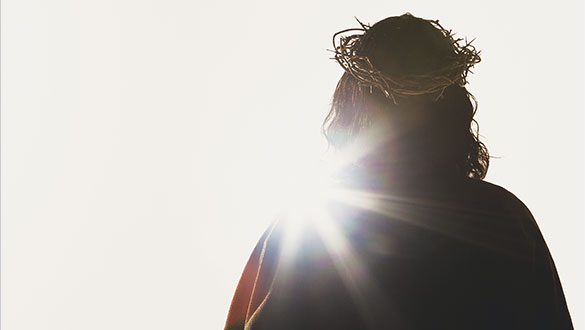
Jesus and the New Covenant

1. Did Old Testament prophets predict that God would make a new covenant with his people? Jer. 31:31-34. Would this be an everlasting covenant? Jer. 32:38-40; Ezek. 16:60-62; 37:26; Isa. 55:3.

Comment: The prophets predicted a new covenant between God and humans — a new basis of relationship. The fact that a new covenant would be made implies two things about the covenant made at Sinai: 1) The Sinai covenant was temporary, serving a temporary purpose, and 2) it was not complete for God's ultimate plan and purpose. The new covenant, unlike the one made at Sinai, will last forever. It is designed for eternal life. "If there had been nothing wrong with that first covenant, no place would have been sought for another" (Heb. 8:7).

What was wrong with the first covenant? "God found fault with the people" (verse 8). God foretold this to Moses: "These people will soon prostitute themselves to the foreign gods of the land they are entering. They will forsake me and break the covenant I made with them. On that day I will become angry with them and forsake them" (Deut. 31:16-18). The people were unable to obey the laws — and since the blessings were conditioned on the Israelites' obedience, the covenant was limited.

Why did God make a temporary covenant when he knew the people would not obey the covenant? We will discuss that later. For now, we need to focus on the new covenant.

2. Will God make his special servant to be a covenant for his people? Isa. 42:1-7; 49:7-9.

Comment: Isaiah used poetry and symbolism to describe a special servant of God. This symbolism was fulfilled by Jesus Christ. Matthew 12:17-21 says that Jesus fulfilled Isaiah 42:1-4, and in Luke 4:18-21, Jesus says that he was fulfilling Isaiah 42:7. Acts 13:47 says that Jesus is the "light for the Gentiles."

The Messiah-Servant was the covenant — he was the basis of the relationship between God and his people. It is only through Jesus Christ that we can have an eternal relationship with God. "The Redeemer will come to Zion," Isaiah 59:20 predicts, "to those in Jacob who repent of their sins." God will make a covenant with these repentant people. His Spirit will be upon them, and his words will remain in them (verse 21). This is the new covenant.

3. Who is the mediator of the new covenant? Heb. 9:15; 12:24. Has the new covenant been established? Heb. 8:6. Is it already being administered? 2 Cor. 3:6.

4. The old covenant was ratified with blood. What is the blood of the new covenant? Matt. 26:28; Mark 14:24; Heb. 10:29. How do we show that we accept the new covenant? Luke 22:20; 1 Cor. 11:25.

Comment: Christians have a relationship with God, and that relationship is on the basis of the new covenant, not the old. In the new covenant, God gives some commands and makes some promises, and those promises have already begun to be fulfilled. The Holy Spirit is given to us not only to transform our hearts but also as a down payment of greater blessings to come (2 Cor. 1:22). Just as the old covenant was made before all the promises were delivered, so also the new covenant has been established before all its promises are completely given.

The new covenant was ratified through the blood of Jesus Christ. Not only did his death pay for our sins, it also ended the old covenant and began the new. When we drink the wine in commemoration of Jesus' death, we show our acceptance of the new covenant, including the forgiveness that is given because of his shed blood.

5. When Jesus established the new covenant, did he set aside the first covenant? Heb. 8:13. Is the old covenant declared obsolete? Same verse.

Comment: Here we see the reason that Christians are not required to keep some of God's laws — because God has declared some of them obsolete. Since God has grouped his laws into covenants, it is essential that we understand the covenants if we want to understand why some Old Testament laws no longer need to be kept. Much of the Old Testament is built on the old covenant, and much of the New Testament is about the new covenant. Although a covenant is not exactly the same as a testament, the concepts are so closely related that a single Greek word is used for both. (For a more detailed study of Hebrews 8, click here.)

6. What kind of regulations did the old covenant have? Heb. 9:1-4. Were the stone tablets part of the covenant regulations? Verse 4. How often did the high priest enter the holiest place in the tabernacle? Verse 7. What did he have to do before he entered? Same verse.

Comment: The high priest entered only once a year, on the Day of Atonement. Before he entered, he had to offer special sacrifices and perform ritual washings. These are described in Leviticus 16.

7. What did the rituals indicate? Heb. 9:9. Were the external regulations temporary? Verse 10. Is Jesus Christ the high priest of better things? Verse 11. Are those better things already here? Same verse.

Comment: In the old covenant, the presence of God was symbolized by the Most Holy Place, the innermost room of the tabernacle. Only one person could go there, only once a year, showing that the old covenant did not really disclose the way for everyone to live in God's presence. The fact that the special sacrifices and rituals had to be regularly repeated showed that the people's hearts were not being cleansed.

Those external regulations were temporary, required only until Jesus Christ brought "the new order." That's because with Christ's new order, people's hearts are being cleansed, consciences are being cleared, sins are being forgiven, and people have access to God through Jesus Christ (verses 14-15). There is a new basis for relationship with God. (For a more detailed study of Hebrews 9, click here.)

8. Are the sacrifices and rituals a shadow of the good things that Christ brought? Heb. 10:1. Could they make anyone perfect? Same verse.

Comment: The rituals are not the realities. They symbolized what Christ would do, but the rituals themselves were not effective in doing what only Christ could do. The laws could not make anyone perfect, but Jesus Christ can (verse 14). He can change the heart. Now that these good realities are here, there is no longer a need for them to be symbolized through external rituals.

9. Does the new covenant include forgiveness of sins? Heb. 10:15-17. Now that sins have been forgiven, is there any need for animal sacrifices? Verse 18. Because of that, can God's people now enter the presence of God? Verse 19. Why are we allowed to do that?

Comment: The room in the tabernacle was only a copy that imitated the heavenly reality (Heb. 8:5). Through faith in Jesus Christ, we do not enter the earthly imitation, but the heavenly reality. We may enter God's presence by the blood of Jesus Christ. Because he shed his blood for us, because he made a real relationship possible with God through the new covenant, we can confidently come into God's presence knowing that our sins are forgiven.

The old covenant assigned Levites to be priests. In the new covenant, Jesus Christ is our high priest — and the fact that Jesus was not a Levite, yet is now a priest, gives further evidence that the old covenant has been set aside (Heb. 7:12). Because he is our perfect high priest, we are encouraged to "draw near to God with a sincere heart in full assurance of faith, having our hearts sprinkled to cleanse us from a guilty conscience" (Heb. 10:22). (For a more detailed study of Hebrews 10, click here.)

10. Have we come to a place like Mt. Sinai? Heb. 12:18-19. Where have we come? Verses 22-24.

Comment: We have come to the heavenly Jerusalem, to the church that approaches God through the new covenant. Paul uses similar word imagery when he says that the new covenant is "the Jerusalem that is above" (Gal. 4:24-26). This is where God's presence really is, and we can boldly come into God's presence through Jesus Christ our mediator (Heb. 4:14-15). "Let us then approach the throne of grace with confidence, so that we may receive mercy and find grace to help us in our time of need" (verse 16).

To the next study in this series

Back to home page of Old Testament Laws

Written by Michael Morrison; copyright 1997 by author

Hit Counter

Click here to tell a friend about this article

Unless noted otherwise, materials on this website are copyright © Worldwide Church of God. All rights reserved.  You may download and print one copy for your own use. If you wish to print more, please contact us. If you would like to donate to help support this ministry, click here.

If you want to receive email notifications about new articles on this site, click here and we'll send a message once a week to let you know what has been added.  Alphabetical list of articles on this website